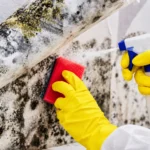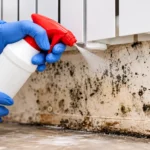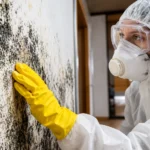
Mould testing may be worth considering when a persistent musty smell has no obvious source, particularly if there are signs of dampness, previous water damage or moisture hidden within the property.
You might notice the smell when you walk into a bedroom, open a wardrobe or enter a property that has been closed for a few days. It may smell stale, damp or earthy, even though there is no visible mould on the walls or ceiling.
A persistent musty smell can be associated with dampness or mould growth, including moisture problems in areas that are difficult to see.
For families, landlords and property managers, the first step is to look for possible sources of moisture. If the cause remains unclear, further investigation can help determine whether mould testing or another form of assessment is appropriate.
What Causes a Musty Smell Indoors?
A musty smell can develop when excess moisture remains within a building or its contents.
Mould grows particularly well in damp and poorly ventilated areas. Australian Government health guidance identifies leaking roofs and walls, faulty plumbing and condensation among the common causes of indoor mould growth.
The odour may therefore be connected to conditions such as:
- A slow plumbing leak
- Water entering through a roof or wall
- Condensation in poorly ventilated areas
- Damp carpet or underlay
- Moisture beneath flooring
- Dampness inside wall or ceiling cavities
- High indoor humidity
- Previous water damage that has not dried properly
The smell alone cannot identify the cause. It is a reason to check the moisture conditions in and around the affected area.
Can You Have a Mould Problem Without Seeing Mould?
Yes. Visible growth is only one possible sign of a damp or mould-affected environment.
Mould may develop in concealed or difficult-to-access areas, including behind plasterboard, underneath flooring, around plumbing, inside cupboards or within roof and subfloor spaces.
Mould problems are also relatively common in Australian housing. The Australian Institute of Health and Welfare reports that nearly 35% of people experienced problems with mould in their current home in 2022, based on the Australian Housing Conditions Dataset.
Australian Government clinical guidance recognises mouldy or musty odour, water-damaged materials and observed moisture as qualitative indicators used in research examining indoor dampness and mould exposure.
A persistent unexplained odour is therefore worth investigating, particularly after a leak, flooding, recurring condensation or another known moisture problem.
What Should You Check When You Notice a Musty Smell?
Before assuming mould is responsible, look for evidence of moisture and changes to nearby building materials.
| What to check | What you may notice |
| Walls and ceilings | Discolouration, staining, bubbling paint or damp patches |
| Wardrobes and cupboards | Odours that become stronger when doors are opened |
| Carpet and flooring | Dampness, staining or stronger odours close to the floor |
| Bathrooms and laundries | Condensation, poor ventilation or recurring mould |
| Windows | Regular condensation around glass, frames or nearby walls |
| Plumbing areas | Leaks, water staining or swollen materials |
| Roof and ceiling areas | Water marks following rain |
| Previously flooded areas | Persistent dampness or odours after visible water has gone |
These signs do not confirm the extent of a mould problem, but they can help narrow down where further assessment may be needed.
The location and timing of the smell can also provide useful clues. An odour that becomes stronger inside a wardrobe may point towards the cupboard, adjoining wall or ventilation conditions. A smell that appears after heavy rain may warrant checking for water entry through the roof or building envelope.
Around bathrooms, laundries and kitchens, plumbing leaks, condensation and ventilation may be relevant. If the smell becomes stronger after a property has been closed for several days, humidity and poorly ventilated areas may also need attention.
What Is Mould Testing?
Mould testing is used to collect information about suspected mould contamination.
Depending on the property and the reason for testing, an assessment may involve a combination of visual inspection, moisture investigation and sampling.
Different situations require different approaches. Testing may be useful when mould is suspected but cannot easily be located, when the extent of contamination is uncertain or when additional documentation is required.
The Mould Network connects property owners and managers with mould professionals who can assess suspected mould and moisture problems across Australia.
How Can Mould Be Tested?
There is no single test that answers every question about an indoor mould problem. The appropriate approach depends on what needs to be investigated.
Air Sampling
Air sampling collects airborne particles from selected locations. Samples may then be analysed to provide information about mould spores present in the sampled air.
An air sample represents conditions at a particular location and time. Results therefore need to be considered alongside conditions within the property rather than interpreted in isolation.
Surface Sampling
Surface samples may be collected where mould growth or contamination is suspected.
Sampling can provide information about material present on a particular surface and may assist with identification when this is relevant to the investigation.
Moisture Assessment
Damp conditions are a key factor associated with mould growth, making moisture assessment a useful part of the investigation.
Readings taken across affected areas can highlight locations requiring further examination, including building materials that may feel or look dry on the surface.
Thermal Imaging
Thermal imaging can help an inspector identify temperature patterns that warrant further investigation.
It does not directly detect mould. Instead, it may help identify areas where moisture or building conditions should be checked using other assessment methods.
When Does Mould Testing Make Sense?
Testing is not automatically required whenever a small patch of visible mould appears. Its value depends on the questions that need to be answered.
Mould testing may be considered when:
- A persistent musty smell has no obvious source
- Mould returns after cleaning
- There has been significant water damage
- Dampness may exist inside walls, ceilings or flooring
- Several rooms appear to be affected
- A landlord or property manager needs clearer information about the affected area
- Remediation work is being planned
- Further assessment is required after mould remediation
For property managers, an inspection can help establish a clearer picture of the property conditions before deciding what work may be required.
If a persistent odour has no obvious source, a professional mould and moisture assessment can help determine whether testing, moisture investigation or another step is appropriate.
Why Finding the Moisture Source Matters
Removing visible mould without investigating persistent moisture can leave the conditions that allowed the problem to develop unresolved.
Australian Government guidance states that mould grows in moist or humid places and identifies damp, poorly ventilated areas as favourable environments for indoor mould growth.
The underlying problem may involve a leaking pipe, roof defect, condensation, inadequate ventilation or residual moisture following water damage.
That is why an investigation may need to look beyond the visibly affected surface. Understanding the moisture conditions is an important part of determining what action may be appropriate.
Should You Be Concerned About Health Effects?
Exposure to indoor dampness and mould has been associated with several respiratory and allergic effects.
Australian Government health guidance states that breathing mould spores and fragments can trigger symptoms including nasal congestion, sneezing, coughing and wheezing, and can worsen asthma and allergic conditions. People with weakened immune systems, allergies, severe asthma or lung disease may be more susceptible to health effects.
A musty smell alone cannot determine a person’s exposure or explain individual symptoms.
Anyone concerned about their health should seek advice from an appropriately qualified healthcare professional.
What Happens During a Professional Mould Inspection?
The exact process depends on the property and the suspected problem.
An assessment may begin with the property’s history, including previous leaks, flooding, roof problems, plumbing failures, condensation or recurring mould.
The inspector can then check relevant areas for visible signs of mould and moisture. Where appropriate, further investigation may include moisture readings, thermal imaging, air sampling or surface sampling.
The findings can help build a clearer picture of the affected areas and whether moisture investigation, sampling, remediation or other action may need to be considered.
What Should Property Managers Document?
For rental and managed properties, keeping clear records can make an ongoing investigation easier.
Record when the odour was first reported, where it is strongest, whether there has been previous water damage and whether the smell changes after rainfall or during humid conditions.
Photos of water staining, visible mould, damaged materials and condensation can also provide useful context.
If an inspection or testing is completed, retain the relevant assessment documentation alongside records of repairs and remediation work.
Can You Test for Mould Yourself?
DIY mould test kits are available, but interpreting indoor mould conditions is more complicated than obtaining a sample.
Mould spores occur naturally in the environment, including in the air. A result showing mould growth therefore needs context before it can tell you much about conditions within a particular property.
A professional assessment can consider sampling results alongside moisture readings, building conditions, water-damage history and the location of suspected contamination.
For a persistent unexplained musty smell, identifying the moisture source may be more useful than relying on an isolated test result.
What Should You Do If the Smell Keeps Coming Back?
If a musty smell returns after airing or cleaning the room, look for an unresolved moisture source.
Note where the smell is strongest and whether it changes after rain, during humid conditions or when cupboards and rooms have been closed.
Check nearby walls, ceilings, flooring and plumbing for staining, condensation, leaks or damp materials. Previous water damage is also worth investigating, even if the visible water has gone.
If you still cannot locate the source, a professional mould and moisture assessment can help investigate the affected areas and determine whether sampling or further testing is appropriate.
Need Help Investigating a Musty Smell?
If a room, wardrobe or property has a persistent musty smell and you cannot identify the cause, further investigation can help establish what may be happening beyond the visible surfaces.
The Mould Network can connect homeowners, families, landlords and property managers with pre-vetted mould professionals across Australia for inspection, testing, removal and related moisture services.
A professional can assess the property and determine whether mould testing, moisture investigation or another service is appropriate.
Request a quote through The Mould Network.